What is an RSJ beam and when do I need one?

Posted By
Jason Massey
Posted At
Homeowner Guide
Posted On
If you've been chatting to a builder or had a structural engineer mentioned in the same breath as your home renovation, chances are you've heard the term RSJ. But what actually is one, and when do you need to use one?
Follow below for a detailed explanation.
What is an RSJ ?
RSJ stands for Rolled Steel Joist — a steel beam with a distinctive I-shaped or H-shaped cross section. You'll also hear them called universal beams (UBs), steel lintels, or just 'the steel.' In everyday conversation, RSJ has become the catch-all term most people use, even if the section being used is technically something slightly different.
The shape isn't accidental. That I-section profile is one of the most structurally efficient shapes in engineering — it puts the material where it's needed most, at the top and bottom flanges, where the bending stresses are highest. The web in the middle resists shear. It's a elegant bit of physics that's been used in construction for well over a century.
An RSJ is essentially a supporting member — a beam or lintel that carries load across an opening and transfers it safely down to the structure below.
What Does an RSJ Actually Do?
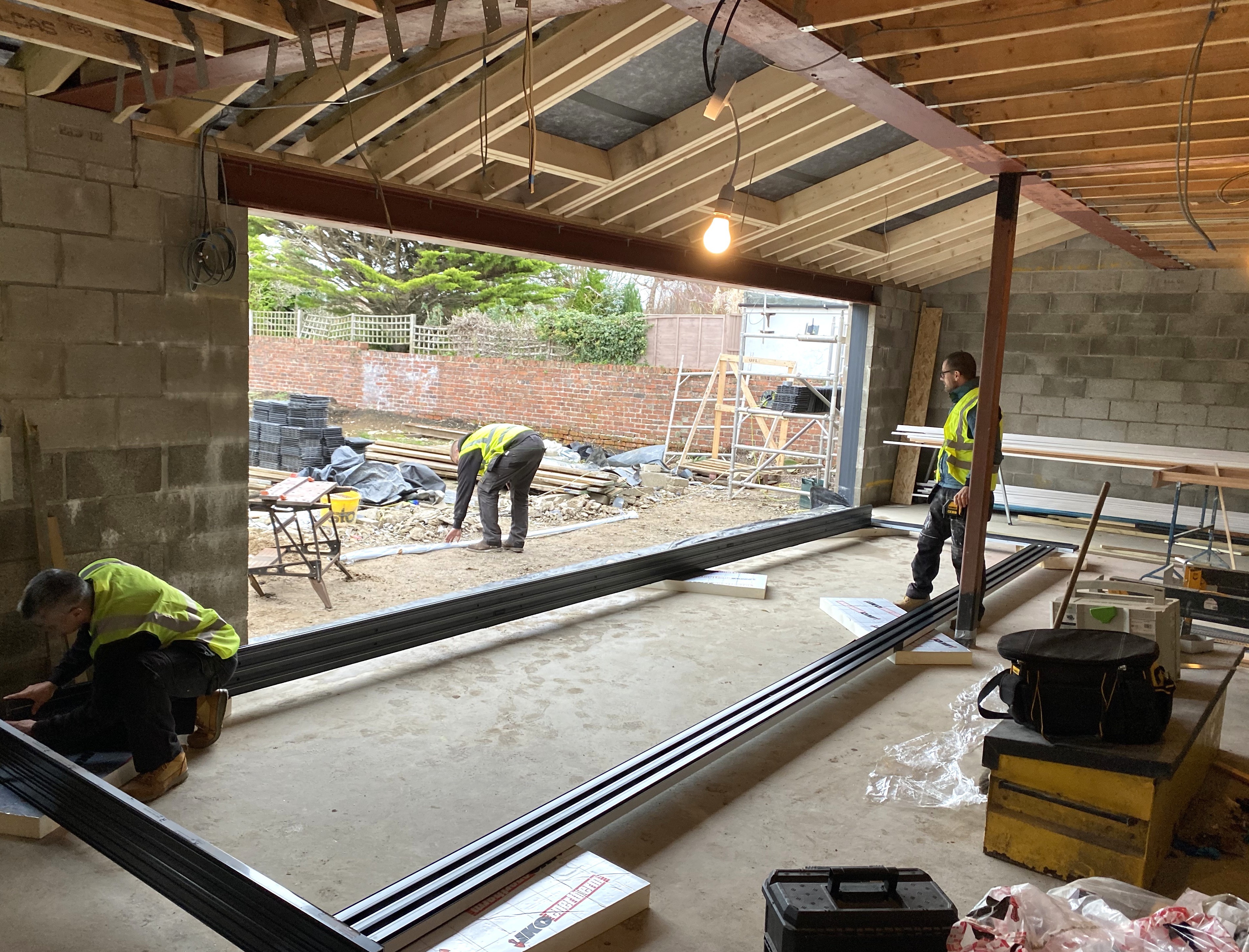
In simple terms, an RSJ carries load across an opening. When you remove a wall, knock through for bi-fold doors, or create a large open-plan space, something has to take the weight of whatever was sitting on top of that wall — floor joists, roof structure, masonry above. That something is usually a steel beam.
The beam spans the opening, picks up the load, and transfers it down through padstones or bearing points into the walls or columns on either side. Get the beam size right and it's invisible once the plaster goes on. Get it wrong and you've got a problem.
Common Situations Where You'll Need One
RSJs come up in residential projects more often than people expect. Here are the most common scenarios:
Removing a load-bearing wall to open up a kitchen, dining room or living space
Creating a wide opening for bi-fold or sliding doors to the garden
Loft conversions — supporting the new floor structure and any alterations to the roof
Chimney breast removal — the chimney above still needs supporting once the breast comes out
Garage conversions — widening the opening or removing the garage door lintel
Single and double storey extensions — spanning over new openings in the existing structure
Structural alterations to support new loads from above
If you're not sure whether your project involves a load-bearing element, a structural engineer can tell you quickly — sometimes just from looking at the drawings and sometimes requiring a site visit.
Why is Structural Design Important?
Every beam is different. The required size depends on the loads being carried, the span, the supporting structure and the overall building layout. Selecting a beam purely by experience or copying another project can lead to excessive deflection, cracking or even structural failure.
How is the Right Size Beam Selected?
This is where the engineering comes in. Choosing the right beam isn't guesswork — it's a calculation based on:
The span of the opening (the wider the opening, the bigger the beam generally needs to be)
The load being carried — how many floors, what's the roof doing, is there masonry above?
The deflection limits — a beam that's strong enough but too flexible will cause cracking in finishes
The bearing conditions — where the beam sits and how the load gets into the supporting structure
A structural engineer will work through these calculations and specify the exact section size required. It's not unusual for two projects with similar-looking openings to need quite different beams depending on what's above them.
The calculation isn’t just about whether the beam is strong enough — it also checks that it won’t deflect excessively under load and cause problems with finishes, doors or windows nearby.
Do I Need a Structural Engineer to Specify the Beam?
For any load-bearing situation, yes — and building control will require structural calculations as part of the building regulations submission. Without them, the work won't get signed off.
Some builders will quote you a beam size based on experience, and experienced builders often have a good feel for what's needed. But without calculations, you have no formal record that the structure has been properly checked, and building control won't accept it.
The structural engineer's calculations and drawings also give the builder clear information to work from — beam size, padstone sizes, temporary propping requirements during installation. It's not just a regulatory box-tick, it's genuinely useful information for the people doing the work.
What About Lintels — Are They the Same Thing?
Not quite, but related. A lintel is a beam that spans a smaller opening — typically a window or door opening in a wall. They're usually precast concrete, steel or sometimes timber depending on the age of the building and the load above.
An RSJ is typically used for larger spans or heavier loads where a standard lintel isn't sufficient. The principle is the same — spanning an opening and carrying load — but the scale and the engineering involved are different.
In older properties especially, you can find all sorts sitting above openings — sometimes nothing you'd recognise as a proper lintel at all. If you're doing work on an older house and opening up walls, it's always worth checking what's actually there before assuming.
How Long Does it Take and What Does it Cost?
The engineering side — calculations and drawings — is typically a quick turnaround for a straightforward beam specification. The beam itself is usually readily available through steel stockholders and most builders will have a supplier they use regularly.
Installation depends on the size of the beam and the complexity of the temporary propping required. A small RSJ over a standard doorway opening might go in in a day. A large beam spanning several metres with significant load above will take longer and require more planning.
Cost-wise, the structural engineering fees for a single beam specification are usually modest relative to the overall project cost. The beam itself varies in price depending on size and length. What costs money is getting it wrong — remedial structural work is always more expensive than getting it right first time.
How Structural Productions can help
At Structural Productions, we regularly provide beam specifications, structural calculations and building regulations drawings for residential projects across South Wales and the Southwest.
Whether it's a straightforward wall removal or something more complex, we'll give you a clear answer on what's needed and why.
Get in touch for a no-obligation chat about your project